
Aromatherapy and Deep Sleep: Which Oils Should You Choose and Why?
Introduction: The Weight of the Night’s Silence and the Awakening of the Senses
It’s three in the morning. Your eyes are fixed on the ceiling, but your mind is wandering miles away. Despite the exhaustion that weighs on your shoulders from the moment you wake up, sleep seems like a foreign land. This chronic fatigue It’s not just a simple drop in energy. It’s a warning sign from your body, which is exhausted by a nighttime stress that you can no longer handle on your own.
Mental restlessness—that constant stream of thoughts and urgent tasks—keeps your nervous system on high alert. Cortisol, the stress hormone, floods your receptors where melatonin should reign supreme. Your nights become fragmented and restless. You wake up feeling as though you’ve been struggling rather than having recovered. Over time, this lack of deep sleep erodes your immunity, your concentration, and your emotional balance.
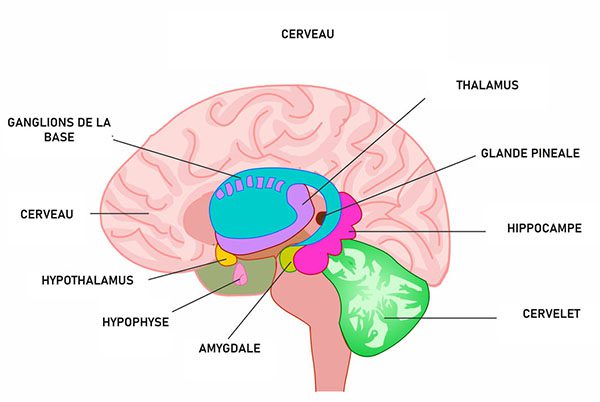
However, there is a biological key to breaking this cycle. As a sleep expert, I invite you to discover how theAromatherapy and Deep Sleep are closely linked. By stimulating your limbic system with targeted natural molecules, it is possible to bypass anxiety. Scientific aromatherapy acts as a chemical mediator to retrain your brain in the art of total relaxation. Welcome to the era of olfactory neuro-relaxation.
1. True Lavender: The queen of GABA and restorative sleep
If the True Lavender (Lavandula angustifolia) holds the top spot, not because of its scent, but because of its molecular complexity. Its effectiveness is based on two active compounds: the linalool and thelinalyl acetate.
The biochemical mechanism of relaxation
Inhaling these molecules triggers an immediate response in the central nervous system. Linalool has a particular affinity for the GABA-A receptors. GABA is the brain’s primary inhibitory neurotransmitter. Its role is to calm neural activity, slow the heart rate, and lower blood pressure. Lavender amplifies this natural response, transforming mental chatter into a soothing murmur.
Why choose it for deep sleep ?
Linalyl acetate provides an additional calming effect. Together, these molecules optimize the quality of deep slow-wave sleep. It is during this phase that the body undergoes cellular regeneration. Using true lavender sends a clear signal to your brain: alertness can subside, and recovery begins. Its use has, in fact, been validated by numerous clinical studies conducted in hospital settings.
2. Sandalwood: The architect of your circadian rhythm
The Sandalwood (Santalum album) is the anchor that stabilizes your nighttime routine. Its secret lies in its concentration of santalols. These molecules easily cross the blood-brain barrier.
Cortisol Regulation and the Circadian Rhythm
Sandalwood acts directly on the hypothalamic-pituitary-adrenal axis. During times of stress, this axis becomes overactive and keeps cortisol levels elevated in the evening. However, cortisol blocks melatonin. Sandalol regulates this system and promotes a decrease in alertness. It thus helps restore a healthy, balanced circadian rhythm.
Its specific benefits :
- Lowered cortisol levels : It reduces the hormonal stress caused by accumulated stress.
- Driving stability: It reduces involuntary movements during the night.
- Paradoxical summit : It helps stabilize dream phases for better emotional processing.
- Long-lasting effect : Perfect for avoiding waking up too early, around 3 or 4 a.m.
3. Roman Chamomile: Nature’s Mental Reset Button
The Roman Chamomile (Chamaemelum nobile) is a great ally for those with a “mind that never stops.” Its composition is rich in esters, including isobutyl angelates, which have neuromodulatory properties.
Mild yet effective sedation
At the biochemical level, its molecules promote parasympathetic dominance. It is this state that allows the body to switch to “rest and digestion” mode. In addition, its flavonoids interact with anxiety receptors, mimicking the effect of certain anti-anxiety medications without causing dependence. It is the best at helping you fall asleep quickly.
Its benefits for falling asleep :
- Muscle relaxation : It relieves physical tension caused by stress.
- Stop overthinking : It calms the constant stream of thoughts.
- Smooth transition : It sets the neurological stage for the first stage of sleep.
4. Ylang-Ylang: The Heart Rate Regulator
Often overlooked, the essential oil ofYlang-Ylang (Cananga odorata) is nevertheless crucial for theAromatherapy and Deep Sleep. It affects the physiological connection between the heart and the brain.
Relieving anxiety-induced tachycardia
Some people stay awake because they can feel their heartbeat. Ylang-Ylang, rich in germacrene D, has blood pressure-lowering properties. It slows the heart rate and calms the sympathetic nervous system. By lowering blood pressure, it sends a signal of absolute safety to the brain. It is the ultimate “let-go” oil, recommended for hyper-vigilant individuals.
5. Expert Synergies: Maximizing Aromatherapy and Deep Sleep
For best results, a blend of oils is often more effective than using a single oil. Here are three protocols that have been tested in sleep research.
The “Full Night” Blend (Diffuser)
This blend is designed to address all aspects of sleep: falling asleep and staying asleep.
- 4 drops of True Lavender (for the GABA).
- 2 drops of sandalwood (for the duration).
- 2 drops of Green Mandarin (for olfactory pleasure and stress relief).
- Usage : Diffuse this blend 20 minutes before going to bed.
“Deep Sleep” Massage Balm (Skin Care)
Applying the product to the skin allows the active ingredients to be absorbed into the bloodstream while providing a physically relaxing experience.
- 10 ml of jojoba oil.
- 3 drops of Roman chamomile.
- 2 drops of ylang-ylang.
- Usage : Massage your wrists and solar plexus right before you slip under the covers.
“Anti-Ruminations” Mist (Olfaction)
- 15 ml of 70% alcohol or distilled water.
- 10 drops of True Lavender.
- 5 drops of Roman chamomile.
- Usage : Spray it on your pillow 5 minutes before bedtime.
6. Practical Guide: How to Incorporate These Oils into Your Routine
Choosing the right tool is just as important as choosing the right oil. On trendtems.com, we analyze the best technologies to help you.
Nebulization vs. Ultrasound
- The Nebulizer : It is the ultimate therapeutic tool. It propels pure microdroplets without heating them. It is the most effective method for saturating the air with active molecules.
- The Ultrasonic Diffuser : It produces a gentler mist infused with essential oils. It’s perfect for lightly humidifying the air in the room while diffusing a soothing fragrance.
The Smart Speaker Revolution
Technology is now making its way into your bedroom. Smart diffusers allow you to schedule cycles. For example, you can set a 10-minute diffusion session to start during your light sleep phases (often around 3 a.m.) to prevent you from waking up completely. They also adjust the lighting so as not to disrupt your melatonin production.
Aromatherapy is even more effective when incorporated into a Quick bedtime routine.
7. Precautions and Contraindications: Safety First
Aromatherapy is a powerful science. Although they are natural, essential oils are highly concentrated and may not be suitable for everyone.
Pregnant women and children
Complete avoidance is the rule during the first trimester of pregnancy. After that, only True Lavender may be used sparingly, following medical advice. For young children, always opt for hydrosol (floral water), which is much gentler, or use a diffuser for a very short time and keep it well away from the child.
Our animal friends
It is essential to be vigilant when it comes to your pets. Cats, in particular, do not metabolize certain compounds well. Make sure they can always leave the room while the essential oils are being diffused. Never force a pet to stay in a room filled with essential oils.
Conclusion
Getting a good night's sleep is no longer an unattainable luxury, but a biological reality that you can influence. By understanding the natural chemistry of lavender, sandalwood, or chamomile, you give your brain the signal to relax that it has been waiting for.
Once you’ve chosen your oils, it’s essential to use the right equipment. Check out our 2026 comparison guide to help you choose the right diffuser.